Cracked, stolen or too old to fix? We'll put in the right new one, test it before we leave and send the report in. Common sizes are often done the same day.
- PriceFree quote
- Time2–4 hours
- TestIncluded
- FilingIncluded
Easiest way? Just call.
When to replace instead of repair
- Freeze damage or a cracked housing
- Someone stole the brass
- The manufacturer stopped making parts
- You've repaired it more than once and it still fails
If a repair will get you through, we'll tell you.
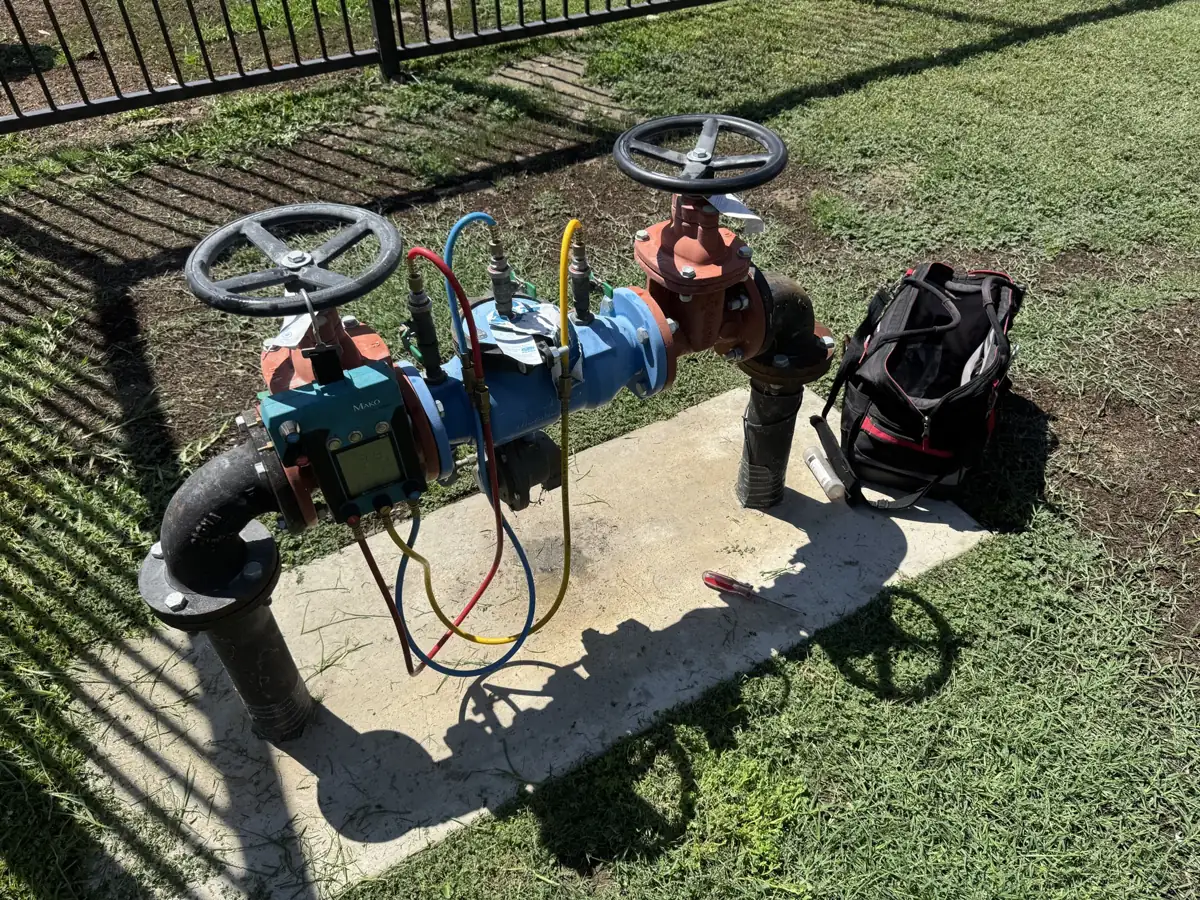
When replacement makes more sense than repair
Most failed devices can be repaired, but not all of them. The clearest case is a cracked body, usually from a freeze or an impact. Brass and bronze bodies can't be patched reliably, so the device has to come out.
Age is another factor. Some older models are no longer made, and parts are hard or impossible to find. Others have been rebuilt so many times that the seats and internal surfaces are worn past the point where a new kit will hold.
Repeat failures are a sign too. If a device fails year after year even after repairs, replacing it often costs less over time than another round of parts and labor.
Replacing a stolen backflow assembly
Scrap thieves cut brass backflow devices off water lines all over Southern California. What's left is an open pipe and, often, water running into the yard or street.
Close the meter if water's still flowing and call us. Common sizes can usually be replaced the same day, tested on the spot, and reported to your district.
To keep it from happening again, we'll suggest a locking cage on a concrete pad. It costs far less than another replacement.
When the district requires a different device
Sometimes the device still works but isn't the right type anymore. If a property changes use, say a retail space becomes a restaurant or an office becomes a dental practice, the hazard level changes and the district may require an RP where a double check used to be enough.
District surveys can also find a device that was never the right type for its connection. In those cases, the old device has to be replaced with one that matches the hazard.
We'll confirm with the district what's required before quoting, so the new device is accepted the first time.
What replacement involves
Replacement starts with confirming the right type and size. In many cases it's the same as what's there, but not always. We'll check whether the existing setup meets current rules for placement, height and clearance, since moving or raising the device during replacement is easier than doing it later.
The water is shut off, the old device comes out, and the new one goes in with new fittings as needed. For most homes and small businesses, that takes two to four hours.
Then the new device is tested, and the passing report is filed with your water district. You get a copy. The device's annual due date usually resets from the date of the new test.
Pricing and quotes
Replacement pricing depends on the device type, size and how much fitting work is needed. A 3/4-inch or 1-inch device on a home costs far less than a 4-inch fire line assembly, and an easy swap costs less than one that has to be raised or moved.
You'll get a free quote before any work starts. The quote includes the device, labor, the test and filing the report with your district.
If you're comparing repair against replacement, we'll give you prices for both. Sometimes repair wins, sometimes replacement does, and you make the call.
Same-day replacement
Common sizes can often be replaced the same day, which matters most after a theft. Bigger or unusual devices sometimes have to be ordered.
Share the size and type when you call, or text a photo. We'll check what's in stock and give you the soonest slot.
Keeping the replacement safe
It makes sense to protect a new device. A locking cage deters theft, and an insulated cover helps where freezes happen. Either can go on the quote.
We also make sure the replacement is placed right, so yearly tests and future service stay simple.
Keeping the same location or moving it
Replacing a device is the perfect moment to check its location. If the old one was in a box that floods, below the sprinkler heads or in a spot too tight to test, the new one can go somewhere better.
Other times the location works and it's a straight swap. Either way, we'll explain and give you the price.
Every replacement starts a new record with your district. The first passing test sets the next due date, and then it's tested yearly like any other device.
Questions
Is it better to repair or replace a failed device?
Most assemblies can be repaired with a rebuild kit. Replacement makes more sense when the body is cracked or frozen, parts are no longer made, the assembly was stolen or damaged, or your hazard has changed and needs a different type. See backflow replacement.
Can a stolen one be replaced the same day?
Often, if the size is in stock. Call and we'll check.
Why folks in Torrance call us
Backflow is what we do. Our testers are certified, our gauges are calibrated, and we send the report to your water district for you, every time.
No surprises on price: $105 for devices under 4 inches, $175 for 4 inches and up, and free quotes on everything else. We answer seven days a week, 6am to midnight, and emergencies around the clock.
Here's how a visit goes. We call or text when we're on the way, find the device, and get the test done. If it passes, that's it: we file the report and send you a copy. If it doesn't, we'll show you what's wrong, tell you the price and fix it if you want us to. Most folks around Torrance never need to be home for any of it.
Torrance and nearby
We do backflow replacement in Torrance, Redondo Beach, West Carson, Harbor Gateway, Lomita and Carson. We can usually come out this week.